

What is the communication stability of a Zigbee fan switch?
Leave a message

In the realm of smart home technology, Zigbee fan switches have emerged as a popular solution for controlling fans with enhanced convenience and efficiency. As a supplier of Zigbee fan switches, I'm often asked about the communication stability of these devices. In this blog post, I'll delve into what communication stability means for a Zigbee fan switch, the factors that affect it, and why it's crucial for a seamless smart home experience.
What is Communication Stability in a Zigbee Fan Switch?
Communication stability refers to the ability of a Zigbee fan switch to maintain a reliable and consistent connection with other Zigbee - enabled devices in a smart home network. When a user sends a command through a smartphone app, voice assistant, or a central hub, the switch should receive and execute that command promptly and accurately. A stable connection ensures that there are no delays, dropped commands, or malfunctions during the operation of the fan.
In a Zigbee network, devices communicate using the Zigbee protocol, which is a low - power, wireless mesh network technology. This means that multiple devices can connect and communicate with each other, creating a network where data can be routed through different paths. For a Zigbee fan switch, a stable communication channel allows it to communicate effectively with the central hub (such as a smart home controller), sensors, and other smart devices in the network.
Factors Affecting Communication Stability
1. Network Interference
One of the primary factors that can affect the communication stability of a Zigbee fan switch is network interference. Zigbee operates in the 2.4 GHz frequency band, which is also used by other wireless technologies such as Wi - Fi, Bluetooth, and some microwave devices. When multiple devices are operating in the same frequency band, they can interfere with each other, causing signal degradation and communication issues.
For example, if a Wi - Fi router is placed too close to a Zigbee fan switch, the Wi - Fi signals can disrupt the Zigbee communication. To mitigate this issue, it's important to ensure proper placement of devices and, if possible, use Zigbee channels that are less congested.
2. Distance and Obstructions
The distance between the Zigbee fan switch and the central hub or other devices in the network can also impact communication stability. Zigbee has a limited range, typically up to 10 - 100 meters depending on the environment. If the switch is placed too far away from the hub, the signal strength may weaken, leading to dropped connections or slow response times.
Obstructions such as walls, furniture, and metal objects can also block or absorb Zigbee signals. For instance, a thick concrete wall can significantly reduce the signal strength between a fan switch and the hub. To overcome this, it's advisable to place the switch within the effective range of the hub and avoid placing it behind large obstructions.
3. Device Density
The number of Zigbee devices in a network can also affect communication stability. As more devices are added to the network, the network traffic increases, which can lead to congestion and interference. Each Zigbee device has a certain capacity to handle data, and if the network is overloaded, the communication between devices may become unstable.
For example, if there are too many Zigbee sensors, switches, and bulbs in a small area, the network may become congested, causing delays in command execution. It's important to plan the network carefully and ensure that the number of devices is within the capacity of the network.
4. Quality of the Zigbee Module
The quality of the Zigbee module used in the fan switch plays a crucial role in communication stability. A high - quality Zigbee module is designed to have better signal reception and transmission capabilities, as well as more robust error - correction mechanisms.

Cheaper or low - quality modules may be more prone to interference and have a higher probability of communication failures. When selecting a Zigbee fan switch, it's important to choose a product that uses a reliable and well - tested Zigbee module.
Importance of Communication Stability
1. User Experience
A stable communication connection is essential for a positive user experience. When a user wants to turn on or off a fan, adjust its speed, or set a timer, they expect the command to be executed immediately and accurately. If the communication is unstable, the user may experience delays, or the command may not be executed at all, which can be frustrating.
For example, if a user tries to turn off the fan using a voice command, but the switch fails to receive the command due to poor communication, the fan will continue running, causing inconvenience.
2. Energy Efficiency
Communication stability also affects the energy efficiency of the fan. A stable connection allows the switch to receive and execute commands precisely, enabling users to control the fan's operation more effectively. For instance, if a user sets a timer to turn off the fan after a certain period, a stable communication ensures that the fan will turn off at the right time, saving energy.
On the other hand, if the communication is unstable and the timer command is not executed properly, the fan may continue running, wasting energy.
3. System Reliability
In a smart home system, all devices are interconnected, and the stability of one device can affect the overall system reliability. A Zigbee fan switch that experiences frequent communication issues can disrupt the operation of other devices in the network.
For example, if the fan switch is part of an automated routine that also involves turning on lights or adjusting the thermostat, a communication failure in the fan switch can cause the entire routine to malfunction.
Our Solutions for Ensuring Communication Stability
As a supplier of Zigbee fan switches, we take several measures to ensure the communication stability of our products.
1. High - Quality Components
We use high - quality Zigbee modules in our fan switches. These modules are carefully selected from reputable manufacturers and are tested to ensure reliable performance. They have advanced signal - processing capabilities and error - correction mechanisms to minimize the impact of interference and other factors on communication.
2. Optimized Design
Our fan switches are designed with communication stability in mind. We use proper antenna designs to enhance signal reception and transmission. The internal circuitry is also optimized to reduce electromagnetic interference and improve the overall performance of the Zigbee module.
3. Compatibility Testing
Before releasing a new product, we conduct extensive compatibility testing with different Zigbee hubs, sensors, and other smart devices. This helps us to identify and resolve any potential communication issues and ensure that our fan switches work seamlessly with a wide range of smart home systems.
Explore Our Zigbee Fan Switch Products
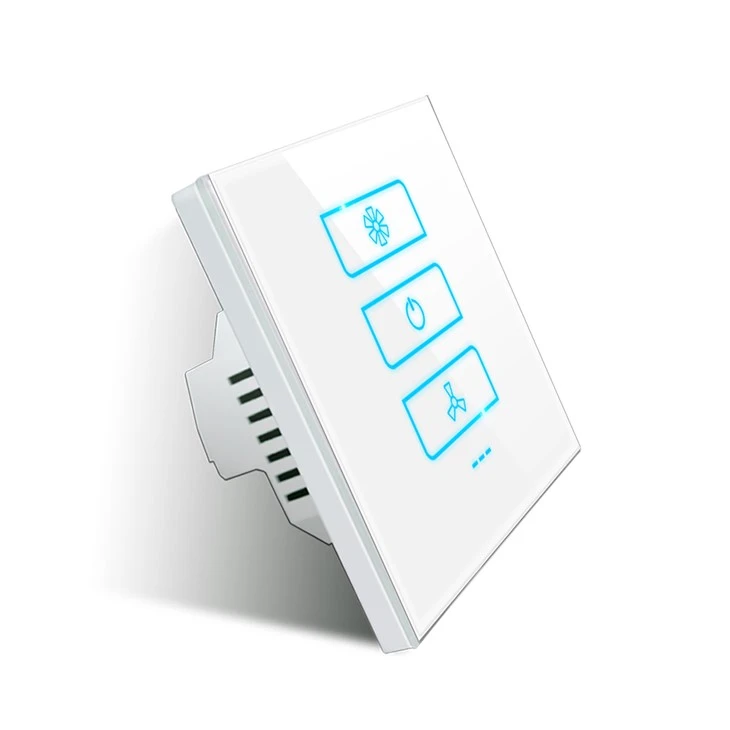
If you're interested in upgrading your home with a reliable Zigbee fan switch, we offer a range of products that are designed to provide stable communication and excellent performance. Check out our Intelligent fan switch panel for European markets and Zigbee Fan Switch for the US market.
We understand the importance of communication stability in a smart home environment, and our products are engineered to meet the highest standards. Whether you're a homeowner looking to enhance the comfort of your living space or a professional installer working on a smart home project, our Zigbee fan switches are a great choice.
Contact Us for Procurement
If you're interested in purchasing our Zigbee fan switches, or if you have any questions about our products, please feel free to contact us. We're always ready to assist you with your procurement needs and provide you with the best solutions for your smart home projects. Let's work together to create a more convenient and efficient smart home environment.
References
- Zigbee Alliance. (2023). Zigbee Technical Overview.
- IEEE 802.15.4 Standard. (2022). Wireless Medium Access Control (MAC) and Physical Layer (PHY) Specifications for Low - Rate Wireless Personal Area Networks (LR - WPANs).


