

What is the shape of a plug for a USA standard socket?
Leave a message

Hey there! As a supplier of USA standard sockets, I often get asked about the shape of the plug that fits these sockets. It might seem like a simple question, but there's actually quite a bit to it.
First off, let's talk about the most common type of plug for a USA standard socket. The standard 120 - volt, 15 - ampere socket in the United States uses a plug with two flat parallel blades and sometimes a round grounding pin. The two flat blades are different in size. One is slightly wider than the other. This design is called polarized, and it's a safety feature. The wider blade is for the neutral wire, and the narrower one is for the hot wire. When you plug in an appliance, this polarization ensures that the electrical current flows in the correct direction, reducing the risk of electrical shock.
The two - blade, non - grounded plug is the simplest form. It's commonly used for small, double - insulated appliances like lamps, radios, and some small kitchen gadgets. These appliances don't require a grounding connection because they're designed in such a way that the user is protected from electrical hazards even without it.
Now, if an appliance needs a grounding connection for safety reasons, we have the three - prong plug. The third prong is a round pin that connects to the ground wire in the electrical system. This is crucial for larger appliances like refrigerators, washing machines, and power tools. In case of a short circuit or an electrical fault, the excess current can flow through the ground wire instead of through the user, preventing serious injury or even death.
There are also some variations in plug shapes for different applications. For example, there are 20 - ampere plugs. These plugs have a T - shaped blade configuration. One of the flat blades has a horizontal section that makes it look like a T. This is to prevent a 20 - ampere appliance from being plugged into a 15 - ampere socket, as 20 - ampere circuits can handle more current and are usually used for high - power appliances.
Another thing to note is that in some older buildings, you might find ungrounded two - prong sockets. If you want to use a three - prong plug in these sockets, you can use a grounding adapter. However, it's important to make sure that the adapter is properly installed and that the grounding is still effective.
As a supplier of USA Standard Socket, we understand the importance of providing sockets that are compatible with these different plug shapes. Our sockets are designed to meet the strict safety standards set in the United States. We use high - quality materials to ensure durability and reliable performance.
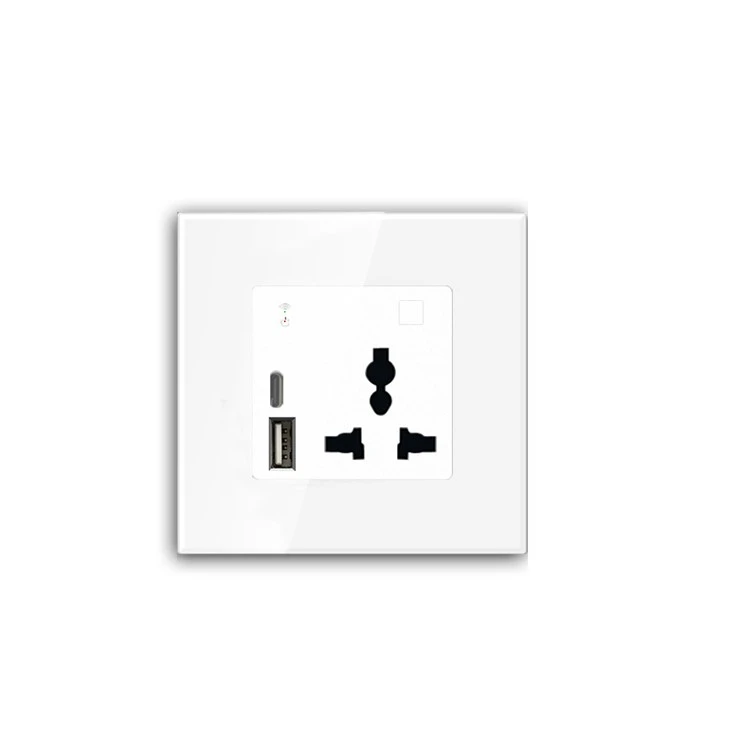
When it comes to smart sockets, like our Charging wall socket, we've taken the shape compatibility into account as well. These smart sockets not only provide a safe and reliable connection for your plugs but also offer additional features like remote control, energy monitoring, and fast - charging capabilities.
If you're in the market for USA standard sockets, whether it's for a new construction project, a home renovation, or just to replace some old sockets, we've got you covered. Our range of sockets is designed to fit all the common plug shapes we've talked about. We offer both standard and smart sockets to meet different needs and preferences.
We know that safety is your top priority, and it's ours too. That's why all our products go through rigorous testing to ensure they meet or exceed the industry standards. Whether you're a homeowner looking to upgrade your electrical system or a contractor working on a large - scale project, we can provide you with the right sockets for the job.

If you have any questions about the shape of plugs for USA standard sockets or about our products in general, don't hesitate to reach out. We're here to help you make the right choice for your electrical needs. And if you're interested in purchasing our sockets, we're more than happy to have a chat about your requirements and offer you the best solutions. So, feel free to get in touch for a friendly and professional procurement discussion.
References
- National Electrical Code (NEC)
- Underwriters Laboratories (UL) standards for electrical sockets and plugs


